
Laminate vs Veneer Vs Acrylic: Choosing the Right Surface for Your Furniture
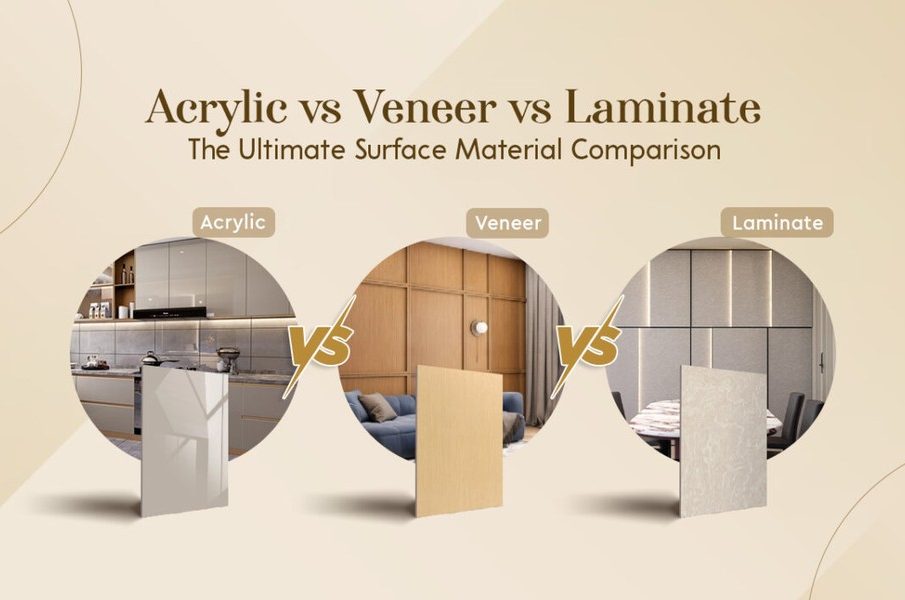
Surface finish plays an important role when it comes to furniture design in terms of aesthetics, functionality and durability. Irrespective of the theme of one’s home, be it traditional or contemporary in nature, understanding different finishes, and benefits of each of them helps one make an informed decision. When evaluating parameters like visual appearance, functionality and practicality, homeowners and designers often compare laminate vs veneer. This helps one make an informed decision when making the choice.
H2 Understanding the Basics: Laminate, Veneer, and Acrylic Explained
Laminates are commonly used surface materials that’s known for their durability, resilience and versatility. This surface material is engineered by pressing several layers of paper and resin and compressing them under high pressure. This surface material is resistant to scratches, presence of moisture, and daily wear making them apt for use in heavy traffic areas when comparing acrylic vs laminate. Laminates come in a variety of colors, textures and finishes and are cost-effective surface material choice making them ideal for use in larger furniture pieces where uniformity is important.
Veneers are known for the look and feel of wood it exudes. They are crafted by slicing thin sheets from real timber and are used on base materials. Veneers are preferred often by homeowners who appreciate organic textures and subtle variations. When comparing laminate vs veneer, laminates are more durable and easier to maintain, whereas veneers are loved for the warmth of natural wood it exudes. Veneers however need more care and are ideal for use in areas where there is minimal exposure to moisture and heavy usage.
Acrylic surfaces are known for their popularity for their sleek, high-gloss appearance and its ability to reflect light providing a sophisticated touch. They are commonly used in modern kitchens and wardrobes. When comparing acrylic vs laminate, acrylic sheets are preferred for its visual appeal and mirror-like finish. Acrylic surfaces however are relatively more expensive, and also are prone to scratches making them a preference in areas of lesser traffic or where one feels they can be maintained well.
H2 Factors That Influence the Best Surface Material for Furniture
The best surface material for furniture is one that meets all interior décor requirements. For those requiring surface material that is functional, visually appealing and apt for long-lasting, heavily used furniture, laminates are an ideal choice. However, if one desires for a rich look and feel, with a touch of sophistication, then acrylic sheets are ideal to choose. And for those who look for rustic touch of nature or wood like finish, veneers offer unmatched elegance.
When choosing surface material, one must also consider the functionality and durability of the material and its aptness for the choice of furniture. Along with this, maintenance is equally important. Laminates are easy to clean and maintain, making them ideal for use in busy areas. Veneers must be polished regularly and handled cautiously whereas acrylic surfaces require gentle cleaning to retain their gloss with no scratches.
Choosing the best surface material for furniture is not about choosing the most popular option, but the one that aligns with your lifestyle and design sensibility. Brands like Royale Touché bring together innovation and craftsmanship across laminates and surface solutions, helping you find a finish that feels both thoughtful and enduring.