
Air Source Heat Pumps vs Gas Boilers: Cost, Efficiency & Installation
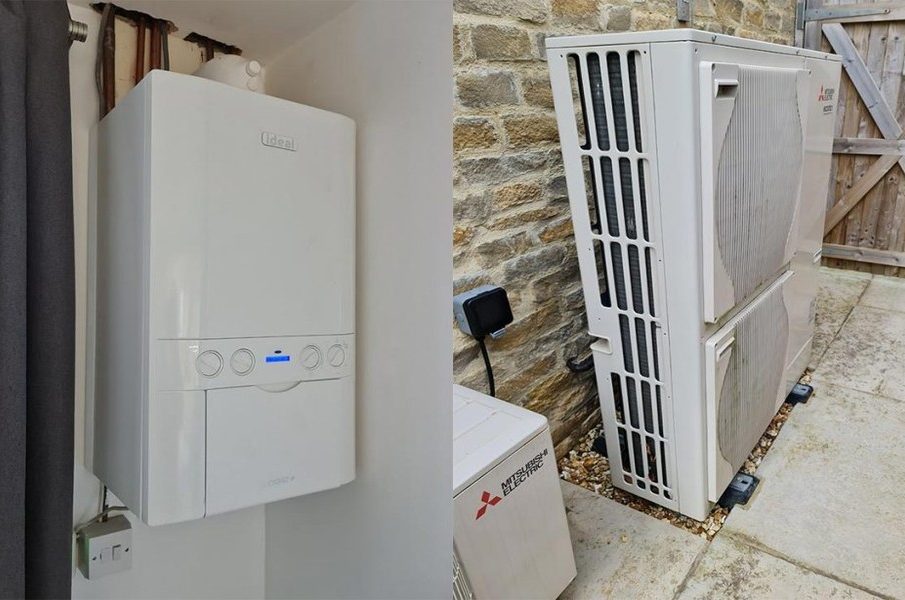
Keeping a home warm consumes a significant amount of energy. In the United Kingdom, domestic heating represents a major portion of both household bills and national carbon emissions.
Data from Energy UK indicates this activity accounts for 17% of the country’s total emissions output. The government has set clear targets to reduce energy use in buildings.
Most British residences, around 85%, are connected to the national grid and use a wet central heating system. For decades, the trusty gas boiler has been the default choice for millions.
Times are changing. Homeowners now face a critical decision about their property’s future comfort. The familiar technology of the past is being challenged by innovative, sustainable alternatives.
This shift is driven by the national commitment to achieve net zero emissions by 2050. Choosing the right system has never been more important, both for the planet and for personal finances.
This article provides a detailed, objective comparison. It analyses upfront investment, long-term running expenses, and practical installation requirements for the two leading options.
Replacing a central heating system is a substantial investment. The following guide aims to offer clear, factual information to support that vital choice.
Key Takeaways
- Domestic heating is a primary source of UK carbon emissions, influencing national energy policy.
- The vast majority of UK homes currently rely on a boiler-based wet central heating system.
- Government net zero targets are accelerating the move towards more sustainable home heating technologies.
- Homeowners must weigh the proven reliability of traditional systems against the environmental benefits of newer ones.
- A comprehensive analysis should cover initial costs, ongoing efficiency, installation logistics, and environmental impact.
- This decision represents a significant financial and practical home improvement investment.
Introduction to Modern Heating Systems
For generations, the choice for keeping a British property cosy was straightforward and almost universal. A familiar technology sat at the heart of most residences, providing reliable warmth and hot water.
Overview of Heating Options in the UK
That technology is the gas boiler. It remains the dominant heating method in UK homes, with around 1.7 million new domestic units fitted every year. Its decades-long reign was built on a foundation of convenience, proven reliability, and historically low running costs.
Today, the landscape is shifting. While traditional boilers are well-understood, a newer alternative is gaining significant traction. Certified installations of electric heat pumps in UK properties now number in the hundreds of thousands.
This growing interest is driven by several factors. Fluctuating energy prices, pressing environmental concerns, and supportive government policies are prompting many to re-evaluate their heating choices.
Despite their different technologies, both system types share a core purpose. They are designed to deliver consistent space heating and domestic hot water throughout the year.
Choosing the right heating system for your home involves balancing several critical considerations:
- The initial financial investment required.
- Predicted long-term running expenses.
- The environmental impact of the energy source.
- The long-term viability and suitability of the technology.
Understanding these core options and trade-offs is essential before delving into the detailed technical and financial comparisons that follow.
How Gas Boilers Work
At the heart of many UK homes lies a familiar appliance that quietly provides warmth and comfort. This device operates on a straightforward principle: burning natural gas to generate heat. The resulting thermal energy is transferred to water, which is then circulated throughout the property.
Principles of Operation and Efficiency
Inside the unit, gas flames directly heat water flowing through a network of pipes. This process is similar to heating water in a pan on a hob. The water temperature typically reaches between 60°C and 80°C.
There are two main types. Combi models heat water instantly on demand. Conventional systems store heated water in a cylinder for later use.
Modern condensing versions are highly efficient, achieving ratings of 90-98%. They capture heat from exhaust gases that older models would waste. With annual maintenance, a boiler can last 10 to 15 years.
Advantages and Limitations
The primary benefits include relatively low initial purchase prices, often between £2,500 and £4,500. Installation is usually completed within a single day. The technology delivers high-temperature heat rapidly to radiators and taps.
Most homeowners are already familiar with its operation. The supporting infrastructure is well-established across the country.
However, this method relies on a fossil fuel, producing direct carbon emissions. It is also subject to volatile market prices for natural gas. From 2025, these units will not be fitted in new builds.
Notably, residential gas boilers in the UK produce twice the carbon emissions of all the nation’s gas-fired power stations combined.
How Air Source Heat Pumps Operate
The principle behind this innovative system is not to create warmth but to relocate it from one place to another. It captures existing thermal energy from the outdoor environment, even on cold days.
Mechanism and Performance Factors
These units function using a refrigerant cycle. A special fluid absorbs ambient warmth, causing it to evaporate into a gas.
This gas is then compressed, which significantly raises its temperature. The hot gas passes through a heat exchanger, transferring its energy to water for the home.
A key measure of performance is the Coefficient of Performance (COP). A COP of 3.0 means the unit delivers three kilowatt-hours of heat for every kilowatt-hour of electricity it consumes.
The Seasonal COP (SCOP) gives a more realistic yearly average. Remarkably, only about a quarter of the final energy delivered typically comes from the electrical grid.
|
Performance Metric |
Typical Value |
Explanation |
|
Coefficient of Performance (COP) |
3.0 – 3.8 |
For every 1 kWh of electricity used, 3-4 kWh of heat is produced. |
|
Seasonal COP (SCOP) |
Varies with climate |
Annual average efficiency accounting for weather changes. |
|
Flow Temperature Range |
35°C – 55°C |
Lower than traditional systems, ideal for underfloor heating or large radiators. |
|
Primary Energy Source |
Ambient air |
Approximately 75% of delivered heat is sourced from the environment. |
This lower flow temperature means they work best with larger heat emitters. Understanding how these pumps work clarifies their high efficiency potential.
Air Source Heat Pumps vs Gas Boilers: Cost, Efficiency & Installation
Choosing a new heating system involves weighing three fundamental aspects: financial outlay, operational performance, and fitting logistics.
Both a modern heat pump and a standard gas boiler reliably provide space heating and domestic hot water. Their methods and implications for homeowners, however, differ substantially.
The familiar option typically requires a lower initial investment. The newer alternative can offer significant long-term savings, especially with available government support. Its superior efficiency is often three to four times greater, though unit energy prices vary.
Fitting a replacement unit is usually straightforward. Integrating a new technology may necessitate property upgrades. The optimal choice depends on a property’s characteristics, budget, and environmental goals.
|
Comparison Dimension |
Gas Boiler |
Air Source Heat Pump |
|
Initial & Running Costs |
Lower upfront price; subject to volatile fuel markets. |
Higher initial investment; potential for lower running costs with grants. |
|
Operational Efficiency |
High efficiency (90-98%); creates heat through combustion. |
Can deliver 300-400% efficiency; transfers existing environmental warmth. |
|
Installation Requirements |
Often a like-for-like swap completed in a day. |
May require larger emitters or insulation improvements. |
Informed decision-making requires a deeper understanding of each technology’s nuances. The following sections provide a detailed analysis of these critical areas.
Upfront and Running Costs: A Detailed Financial Comparison
The economics of domestic warmth extend far beyond the initial purchase price. A comprehensive financial analysis must scrutinise both the immediate investment and the ongoing operational expenses.
Initial Investment and Installation Costs
A traditional gas-fuelled system typically requires an outlay of £2,500 to £4,500 for supply and fitting. The newer, electric alternative carries a higher initial price, generally between £7,000 and £13,000.
However, the Boiler Upgrade Scheme in England and Wales offers a £7,500 grant. This can reduce the net expense for eligible homeowners to approximately £6,856. Similar support exists in Scotland through Home Energy Scotland.
Long-Term Running Costs and Savings
Annual bills are determined by system efficiency and fuel prices. For a mid-sized home needing 12,000kWh of warmth, a modern gas boiler might incur yearly costs of around £894.
The electric pump, while more efficient, uses pricier electricity. On a standard tariff, its annual running costs could be nearer £1,160. Switching to an off-peak tariff can lower this to about £940.
Furthermore, these units often last over 20 years, compared to 10-15 for a conventional boiler. This longer lifespan improves the long-term value proposition.
Installation Process, Retrofits and Practical Considerations
The physical process of fitting a new heating system involves distinct timelines and property adjustments.
A straightforward boiler swap often completes in one day. Existing pipework and radiators usually remain in place.
Installation Timeframes and Required Home Adjustments
Fitting a modern heat pump typically requires about a week. This includes placing an outdoor unit and possible internal upgrades.
A detailed survey comes first. Engineers assess insulation standards, radiator size, and available outdoor space.
Good air circulation is needed for the external unit. Ground source models require significant garden area for groundwork.
Larger radiators or underfloor heating are often recommended. They work better with the lower flow temperatures these systems provide.
Improved insulation enhances performance. It reduces heat loss and helps the unit run efficiently.
Planning permission may be needed in flats or conservation areas. Many detached homes benefit from permitted development rights.
Professional installers manage the process to minimise disruption. The result is a well-integrated, efficient heating system.
Energy Efficiency and Environmental Impact
The environmental credentials and energy performance of a home heating solution are now pivotal factors in the decision-making process. This analysis moves beyond mere cost to examine how effectively each technology uses resources and its broader ecological consequences.
Efficiency Ratings and Seasonal Performance
Modern condensing gas boilers are highly efficient appliances. They convert 90-98% of their fuel’s energy into useful heat.
This represents the practical limit for combustion-based systems. In contrast, heat pumps operate on a different principle.
They move existing warmth rather than generate it. This allows them to achieve a Coefficient of Performance (COP) of 3.0 to 3.8.
Remarkably, this means for every unit of electrical energy consumed, three to four units of heat are delivered. The Seasonal COP (SCOP) provides a more realistic annual average, accounting for varying outdoor temperatures.
Carbon Footprint and Sustainability
The environmental impact is stark. Residential gas boilers in the UK produce twice the climate-heating carbon emissions of all the nation’s gas-fired power stations combined.
Heat pumps produce zero direct on-site emissions. Their carbon footprint is tied to the electricity grid.
With 38.2% of UK power generated from renewables in 2023, these systems are already relatively clean. They automatically become greener as the grid decarbonises further.
Combining a heat pump with solar panels can create a near-zero-carbon heating system. Choosing models with natural refrigerants like R290 (propane) also minimises environmental impact.
Practical Implications and Home Suitability
A property’s physical characteristics play a decisive role in which heating technology will perform best. A traditional boiler can function in virtually any home connected to the mains network. A heat pump, however, has more specific prerequisites for optimal operation.
Retrofit Requirements and Home Insulation Considerations
These systems excel in well-insulated properties with low heat loss. Good insulation prevents the unit from working excessively hard. Properties with an Energy Performance Certificate (EPC) rating of C or above are generally well-suited.
Lower flow temperatures mean existing radiators may need upgrading. Larger models or underfloor heating distribute warmth more effectively. This ensures comfort without straining the system.
|
Property Characteristic |
Suitability for Traditional Boiler |
Key Considerations for Heat Pump |
|
Insulation Level |
Works adequately in most situations. |
Critical for efficiency; poor insulation increases running costs. |
|
Radiator System |
Compatible with standard-sized units. |
Often requires larger surface area radiators for effective heat distribution. |
|
Property Type (e.g., listed building, flat) |
Usually straightforward if gas supply exists. |
May face planning constraints; external unit placement needs careful assessment. |
Some property types, like listed buildings or flats, present challenges. High-temperature heat pumps offer a solution where major modifications aren’t feasible.
Hot water provision also differs. Most heat pumps require a storage cylinder, which a conventional boiler system may already have.
Future Trends: Government Initiatives and Technological Innovations
The landscape of domestic warmth is undergoing a profound transformation, driven by policy and innovation. The UK government has a legally binding target to reach net zero emissions by 2050.
This commitment directly shapes the future of home heating. From 2025, new build homes cannot install traditional gas boilers.
Financial incentives like the Boiler Upgrade Scheme, offering £7,500, make newer technology more accessible. This support is crucial for accelerating adoption.
|
Trend Area |
Key Development |
Implication for Homeowners |
|
Policy & Regulation |
2025 phase-out in new builds; 11 countries already have boiler bans. |
Traditional boilers become a less viable long-term option. |
|
Financial Support |
Grants of up to £7,500 available for eligible installations. |
Reduces the significant upfront investment required for new systems. |
|
Technological Advancements |
Hybrid systems and solar-integrated source heat pumps emerge. |
Offers flexible pathways to decarbonise heating over years. |
Expert Guidance from Abercorn Heating Ltd
Navigating this shift requires professional insight. Abercorn Heating Ltd provides expert assessments of a property’s specific needs.
Their engineers understand both established and renewable heating technologies. This ensures homeowners make informed, suitable choices for their circumstances.
Innovative Solutions by Abercorn Heating
Forward-thinking specialists develop bespoke retrofit approaches. Abercorn Heating implements cutting-edge heat pumps that integrate with existing infrastructure.
These solutions minimise disruption and optimise performance. Investing now protects against future regulatory changes and price rises many times over the system’s lifespan.
Conclusion
Ultimately, selecting the right heating solution balances immediate practicality with long-term vision. The familiar gas boiler offers a lower initial cost and straightforward installation for many homes.
In contrast, a modern heat pump represents a sustainable technology with superior energy efficiency. Government grants help bridge the upfront price gap, promising lower running costs over its extended lifespan.
The optimal choice hinges on your property’s specific characteristics, particularly its insulation. A professional survey is therefore invaluable.
By weighing both financial and environmental factors, homeowners can confidently choose a system that ensures comfort for years to come.
FAQ
Which system has lower running expenses?
An air source heat pump typically offers significantly lower ongoing bills. While it uses electricity, its high efficiency means it generates more thermal energy than it consumes. This can lead to substantial savings compared to a traditional gas boiler, especially as fossil fuel prices fluctuate.
Is the initial investment for a heat pump much higher?
Yes, the upfront cost for purchasing and installing an air source unit is generally higher than for a new gas boiler. However, the Boiler Upgrade Scheme provides a government grant of £7,500 to help offset this. When combined with long-term energy bill savings, the overall financial picture can be very favourable.
Are these units suitable for older homes?
They can be, but property assessment is crucial. Older dwellings often require improved insulation and may need larger radiators or underfloor heating to work optimally with the lower flow temperatures a heat pump provides. A survey from a specialist like Abercorn Heating Ltd is essential to determine suitability.
Do they work effectively during cold British winters?
Modern models are designed to operate efficiently in sub-zero conditions. Their seasonal performance is measured by the SCOP rating. While efficiency may dip slightly in extreme cold, a correctly sized system from a quality manufacturer will reliably provide heating and hot water throughout the year.
How does the carbon footprint compare?
An air source heat pump system produces far fewer direct carbon emissions than a gas-fired boiler. As the UK’s national grid continues to decarbonise with more renewable electricity, the environmental advantage of using this technology over burning natural gas becomes even greater.
What are the key home adjustments needed for installation?
The main requirements are an outdoor space for the external unit and space indoors for a hot water cylinder. Existing pipework and radiators may need upgrading to handle lower system temperatures efficiently. The process is less disruptive than many think, and experienced installers manage it with minimal fuss.